
In today’s rapidly shifting marketplace, business development success depends on how organizations manage their people. Sales techniques and new market entries matter, but they cannot sustain growth without a workforce that is engaged, scalable, and strategically aligned with company goals.
This is where a future-ready digital HR strategy comes in. It transforms HR from a back-office function into a strategic growth partner. By leveraging data, automation, and AI, businesses can not only improve employee experiences but also directly support expansion, reduce costs, and accelerate innovation.
This complete guide explores how digital HR strategy connects to business KPIs such as employee retention, engagement, and recruitment ROI—and how organizations can implement it to fuel long-term business development.
Why a Digital HR Strategy Matters for Business Development
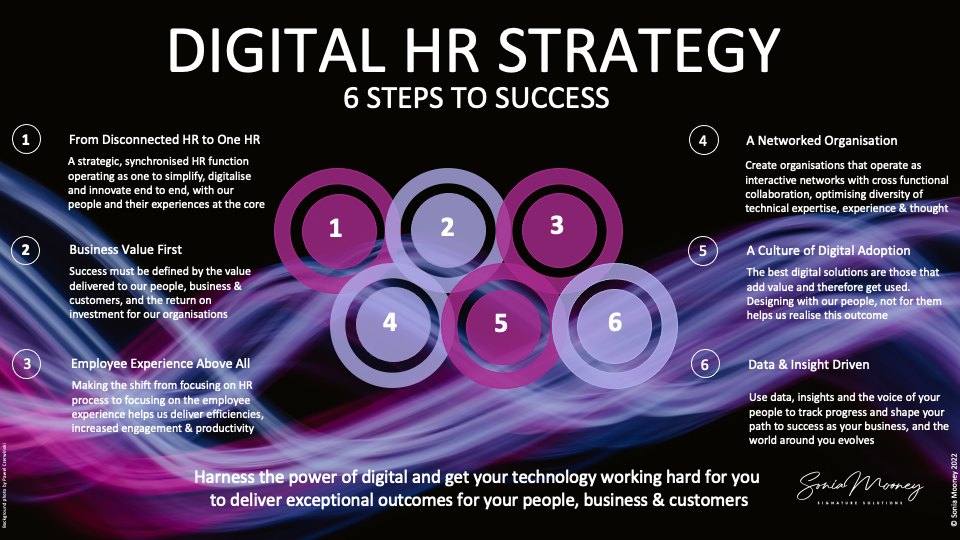
Traditional HR models focus on administration: payroll, compliance, and benefits. But business development requires more than efficiency—it requires HR as a driver of growth.
- Retention: Losing skilled employees increases costs and delays expansion. Digital HR tools help identify at-risk employees and implement engagement strategies that reduce turnover.
- Engagement: Engaged employees deliver higher productivity and better customer experiences, fueling revenue.
- Recruitment ROI: Hiring decisions must deliver measurable business impact. Digital HR provides data to assess cost-per-hire, quality of hire, and long-term performance.
Leadership challenge: Executives often struggle to link HR outcomes with revenue targets. A digital HR strategy bridges this gap by translating people metrics into financial results, making HR an integral part of growth discussions.
What is a Digital HR Strategy in the Context of Business Growth?
A digital HR strategy is the integration of technology, analytics, and automation into HR practices. It goes beyond digitizing processes—it redefines HR as a business partner.
For business development, this means:
- Scalability: Cloud-based HR platforms support global expansion without heavy overhead.
- Predictive insights: Workforce analytics forecast hiring needs before entering new markets.
- Talent pipelines: Recruitment strategies align directly with product launches and regional expansions.
In simple terms: a digital HR strategy ensures that every HR decision contributes to business development goals.
Benefits of Implementing a Digital HR Strategy for Growth
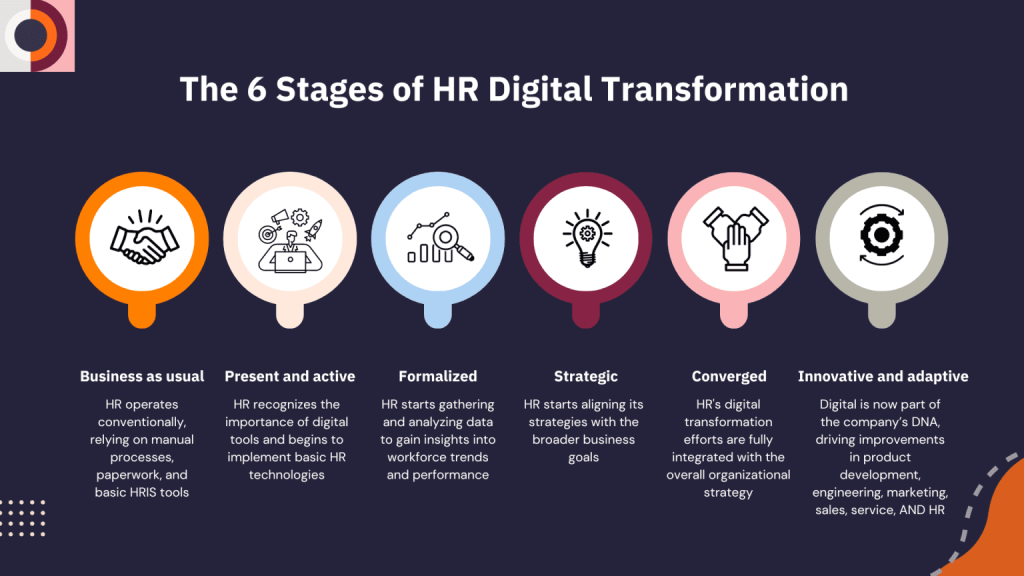
- Improved Retention = Lower Costs and Faster Growth
Employees leaving after a year or two can stall expansion. Predictive analytics and continuous feedback platforms reduce attrition, keeping growth momentum steady. - Engagement Drives Revenue
Highly engaged employees show 21% higher productivity, according to Gallup. Digital tools enable real-time recognition, learning opportunities, and collaboration platforms that foster motivation. - Smarter Recruitment ROI
Recruitment is often one of the largest HR expenses. Digital HR systems use AI to target the right candidates, reduce time-to-hire, and ensure long-term fit, improving the ROI of every hire. - Automation Reduces Costs and Accelerates Operations
Repetitive processes like payroll, attendance, and compliance are automated. This saves time and money, freeing HR teams to focus on strategic growth tasks. - Scalability for Market Expansion
Companies entering new regions can deploy cloud HR systems instantly, ensuring consistency across global teams without major infrastructure costs. - Leadership Empowered by Data
Instead of relying on intuition, executives gain dashboards that link people data with KPIs—helping them make better expansion and investment decisions. - Competitive Advantage
Companies with advanced HR systems attract top talent, build stronger employer brands, and outperform competitors in business development.
How to Develop an Effective Digital HR Strategy Aligned with Business Development
- Align HR Goals with Business KPIs
Define metrics such as retention rates, engagement levels, and recruitment ROI—and link them to growth outcomes like revenue increase or market share expansion. - Leverage AI and Automation
- AI chatbots for initial candidate screening.
- Automated onboarding for faster integration.
- Predictive analytics for workforce planning.
- AI chatbots for initial candidate screening.
- Build a Data-Driven Culture
Encourage leaders to use HR data when making growth decisions. For example, entering a new market should be backed by workforce capacity insights, not just sales forecasts. - Address Leadership Challenges
Train executives to interpret HR metrics and connect them with development strategies. For example, understanding how retention impacts expansion timelines. - Track Recruitment ROI Effectively
Use digital systems to measure cost-per-hire, quality of hire, and performance after six months to ensure recruiting efforts support business growth. - Adopt Flexible HR Models
Implement hybrid and remote models to tap into global talent pools without heavy infrastructure investment. - Case Example
A European fintech scaled into Asia by deploying a digital HR platform. Within 18 months, they reduced time-to-hire by 35%, improved retention by 22%, and expanded into three new markets simultaneously.
Emphasis on Diversity, Equity, and Inclusion (DEI) as a Growth Driver
DEI is not just a compliance requirement—it is a business development accelerator.
- Diverse teams foster creativity, essential for innovation.
- Inclusive practices expand access to global talent pools.
- Equity initiatives strengthen employer reputation, making it easier to attract high-performing professionals.
Research by McKinsey shows that companies with diverse executive teams are 33% more likely to outperform peers in profitability—a direct connection between HR strategy and growth outcomes.
Future Trends Shaping Digital HR Strategies for Business Expansion
- Predictive Workforce Analytics
Anticipate talent needs before launching into new regions. - AI-Powered Engagement Platforms
Tailor employee experiences to reduce attrition and boost satisfaction. - Big Data and HR Insights
Link workforce metrics to financial outcomes, creating transparency in ROI. - Hybrid and Remote Work Models
Open access to global talent, enabling expansion without large office costs. - Skill-Based Hiring and Upskilling
Instead of focusing on degrees, HR teams invest in skill-based recruitment and digital learning platforms to prepare for future business demands.
Case Study: How [Corporation] Used Digital HR to Accelerate Business Development
A global manufacturing company faced challenges with high turnover and slow international hiring. By implementing a cloud-based digital HR system with AI-driven recruiting, they achieved:
- 20% improvement in retention, saving millions in rehiring costs.
- 40% reduction in time-to-hire, enabling quicker entry into new markets.
- 25% boost in engagement, which increased productivity across regions.
The result: accelerated business development and stronger global market presence.
Conclusion: Is Your Organization Ready for Digital HR-Driven Business Growth?
A future-ready HR strategy is more than an upgrade—it’s a business necessity. It ensures that talent, technology, and strategy all work together to achieve measurable growth.
Ask yourself:
- Are HR processes aligned with revenue goals?
- Do leaders use HR data for strategic decisions?
- Can your current HR systems support global expansion?
If not, now is the time to invest in digital HR as a growth engine, not just an administrative function.
Discover more insights and business development strategies at bsnswheel.com
FAQs
1. How does a digital HR strategy increase revenue?
By boosting retention, reducing costs with automation, and driving higher productivity, HR directly contributes to revenue growth.
2. What KPIs should businesses track for HR-driven growth?
Key metrics include retention rates, engagement levels, recruitment ROI, and productivity scores.
3. Can AI and automation really reduce HR costs?
Yes—AI reduces hiring costs, while automation streamlines payroll, onboarding, and compliance, freeing resources for business development.
4. How does employee retention affect business development?
Stable workforces lower costs, maintain performance, and allow businesses to expand faster without constant rehiring.
5. What role does DEI play in expanding markets?
DEI enhances innovation and helps businesses connect with diverse customer bases, creating stronger market opportunities.